"What?"... you may think, "Technology has long been a part of language learning. How can it be emerging?"
I'm glad you asked, 'cause here's my opinion, love it or leave it.
Traditional technology use in language learning has focused on technology as a tool to complement the learning process. Mobile computer lab carts in language schools; language labs (yes, with or without state-of-the-art headphones), CDs and tape decks. We've all been there, done that. However, that traditional role is transitioning with the emerging technologies of thin-client, MALL and Cloud computing.
Classroom management software is increasing in popularity, and the number of available online learning environments has exploded to include over 100 languages, including dialects, and offering a buffet of approach and method flavours that would make the hungriest of language planners drool.
With all of this, of course, comes the modern language 'diner'... the computer savvy, tech smart, mobile young employee ready for a change of country in order to improve the lot of his (or her!) family. Flash and Shockwave media make viewing real-language speakers and listening to authentic spoken language a breeze. The ability to pick-and-choose the learning environment, time of day of study, duration of the learning moment... who could ask for anything more?
Will you be ready for this new breed of learner in the new classroom? Will you be able to adapt your traditional, classroom-bound teaching approach to the needs of this ethernet educational morph? How will your knowledge of language learning fit with the knowledge of a technology that IS the language being learned?
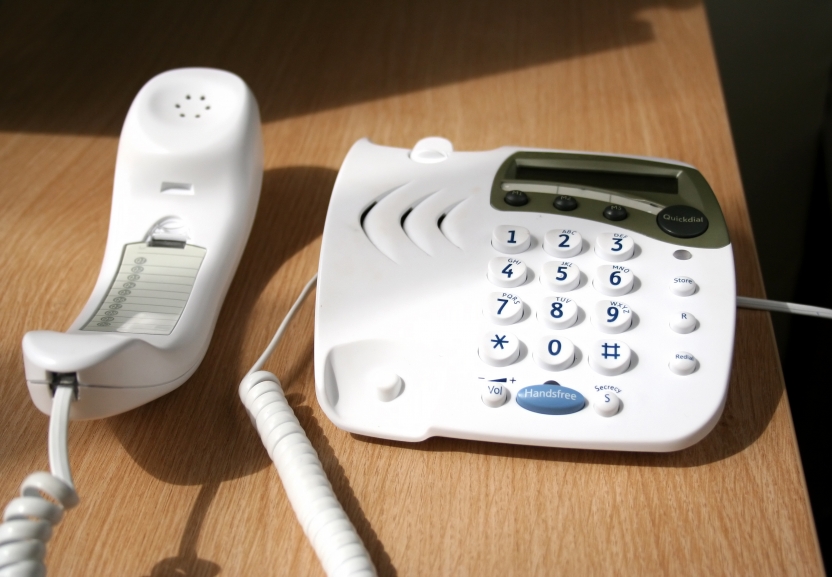
Please leave your comments after the beep...
Beep



First to post!
ReplyDeleteI know a couple of teachers who think the Rosetta Stone software (http://www.rosettastone.com/) is the cat's meow. From a (high school) student's perspective? B-o-r-r-r-i-i-i-n-n-n-g-g-g.
I once asked students what issue(s) they had with the program. Their biggest concern was that they weren't learning 'Winnipeg' English. And what they meant by that was that they wanted to learn English skills they could use to understand and converse with Canadian kids their age and to be able to get a job. And they preferred human interaction to the computer monitor for their learning.
Beep
@ J.
ReplyDeleteA set of CD/DVDs wasn't quite the emerging technology I as referring to. That hearkens back to the auiolingual lab method, more so than the emerging technologies of today. I'm referring to the technological learner who needs to learn, for example, the language of the technology used in performing a job; or perhaps, someone who has little or no time to sit in front of a computer or in a classroom to learn a language, but has a smartphone with MALL software installed and can learn on-the-go. That's more the classroom I see for language learning in the future.
Cheers
Beep
ReplyDeleteMy semi-allusional-like device referencing the Rosetta Stone (Live interactive sessions! Online community!) was an attempt to address the need for an affective humanistic approach to language teaching. The students in question have access to all the latest technologies but still prefer the interactivity of the 'human touch' (and I mean that in a good way) to cloud computing and ipadding (did I just say ipadding?).
In twenty years 80% of said students will be employed in jobs and careers that don't even exist at present. This could also likely be said of the generation previous and the generation previous to that and the generation . . .
And yet, despite all our technological and pedagogical advances, we still build brick and mortar schools and fill them with carbon-based life forms.
In other news . . .
We all know the desktop computer will soon join the 8-track in the museum of technology, but now you can also forget about the smart phone and the ipad. Scientists at the University of Queensland in Australia recently published a paper discussing nonlocality in terms of time-like entanglement.
http://arxiv.org/PS_cache/arxiv/pdf/1101/1101.2565v1.pdf
Bill!
Get that DeLorean out of mothballs!
We're talking time travel here!
This is even more exciting than that magical day in June when the new phone books are delivered.
Okay, sure, it's only on a quantum level and the actual technology to accomplish time travel doesn't exist yet. But still . . .
I fear, Bill, you are envisioning a scenario somewhat akin to the future profiled in the Matrix series of movies. If that be so, book me a passage on the Nebuchadnezzar. Long Live Zion!
Beep
OK... first things first... floating through a wormhole to get to Superstore is a bit far fetched, even for Winnipeg! Secondly, we all know that Hollywood always gets its facts from real life. Thirdly... how did you know about the Delorian?
ReplyDelete1. I bet it's warmer in the worm hole than in Winnipeg.
ReplyDelete2. You mean, Michael J. Fox really did travel back to the fifties?
3. Bill, EVERYONE knows about your Delorean.
Beep.